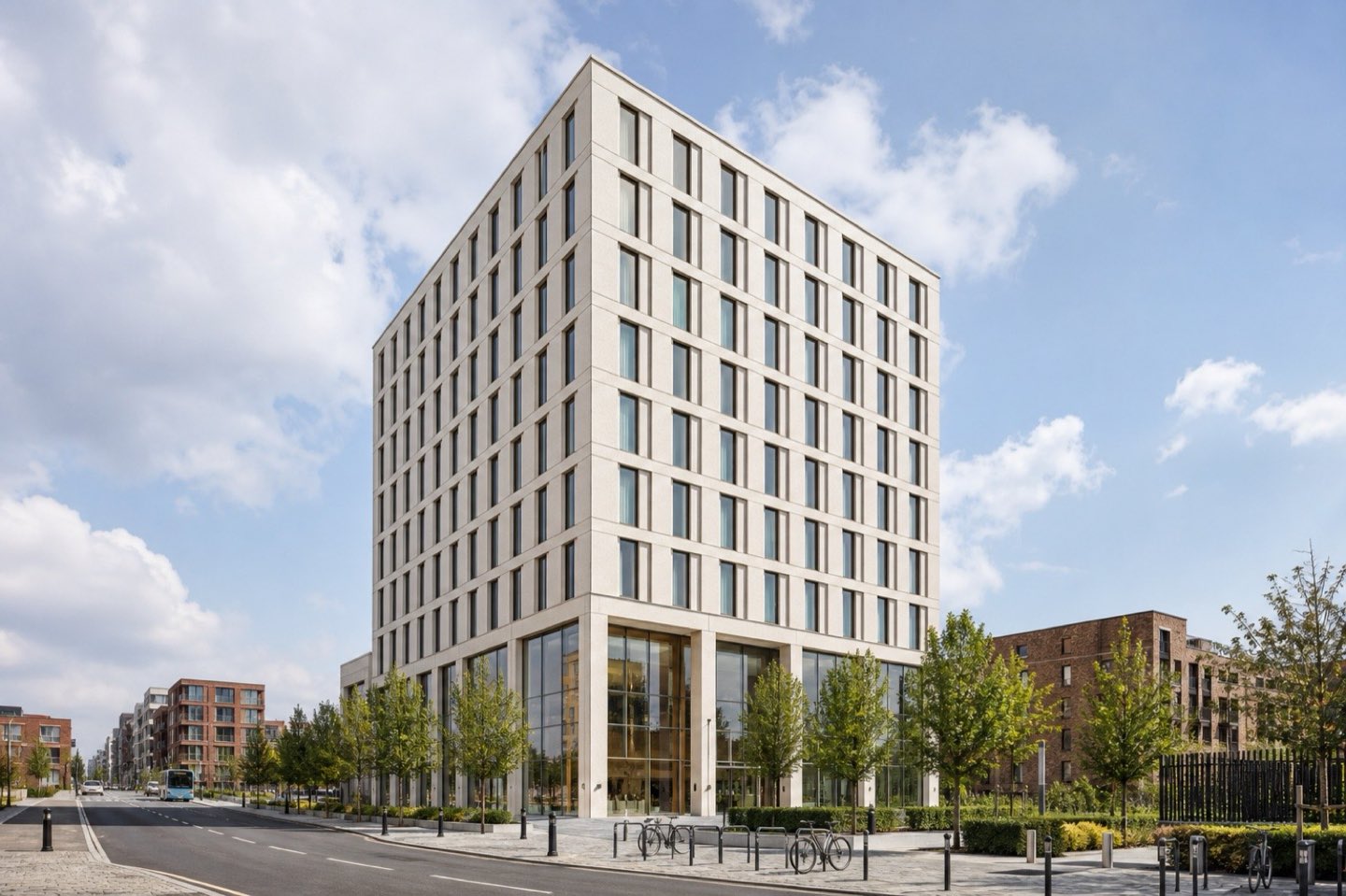
Student demand is still growing, with record UCAS applications in 2026, and new student housing supply is running below the long-term average. But average rental growth slowed to 2% in 2025/26, down from 8.3% at its peak (Knight Frank), occupancy has fallen in several regional cities, and values have softened. Investment volumes were strong in Q1 2026 and weak in Q2.
What is the current state of the UK PBSA market?
The UK PBSA market is the student housing segment of the wider living sector in the United Kingdom, a mature institutional real estate market owned mainly by listed companies, private equity, pension funds and universities. After several years of near-full occupancy and rapid rent rises, the student market moved into a more selective phase in 2025 and 2026. This market update draws on the latest research from Knight Frank's quarterly UK Student Market Update report, Unite Group's 2025 and 2026 results, BONARD, Savills, CBRE, UCAS, the Home Office and the Building Safety Regulator.
| Indicator | Latest figure | Source and period |
|---|---|---|
| PBSA beds analysed | c.755,000 across 3,509 assets | BONARD, September 2026 |
| Investment volume | £4.3bn | Knight Frank, 2025 |
| Investment volume, first half | £2.3bn | Knight Frank, H1 2026 |
| New beds delivered | 19,200 | Knight Frank, 2025 |
| Beds under construction for 2026/27 | c.19,000 | Knight Frank, Q2 2026 |
| Prime London direct-let yield | c.4.75% NIY | Knight Frank, Q2 2026 |
| Regional prime direct-let yield | c.5.50 to 5.75% NIY | Knight Frank, Q2 2026 |
| Average sector occupancy | c.86% | Unite Group, 2025/26 |
| Rental growth, all room types | 2% | Knight Frank, 2025/26 |
Figures are from different publishers and methods; read each with its source and period. We refresh this market update as new research is published.
The headline picture of student living hides wide variation between cities and between schemes. The strongest university markets remain undersupplied for student housing, while several regional cities have more beds than students willing to pay for them. We track that city-level picture in the PBSA Capital Monitor.
How strong is student demand in the UK?
Student demand is the foundation of the sector, and applications are still rising. By the June 2026 UCAS deadline, a record 695,740 applicants had applied, up 4% on the year; UK applicants rose 4% to 547,390 and international undergraduate applicants rose 7.1% to 148,350 (Knight Frank, Q2 2026, citing UCAS). On results day in August 2026, a record 446,690 applicants of all ages and domiciles had been accepted, including a record 262,820 UK 18-year-olds, up 3%, while international acceptances through UCAS rose 2% to 53,740 (UCAS, August 2026).
Two forces sit behind a softer student market in some cities. First, more students are staying at home: 35% of June 2026 applicants said they intended to live at home, up one point on the year (Knight Frank, Q2 2026). Second, government policy on international students has tightened. Most students lost the right to bring dependants from 1 January 2024. The Graduate Route is being cut to 18 months for applications from 1 January 2027 (Home Office, October 2025), and an international student levy of £925 per international student per year takes effect in England from 1 August 2028 (GOV.UK, July 2026). Sponsored study visa applications from main applicants fell 16% to 360,700 in the year to August 2026 (Home Office, September 2026).
International students make up a large share of direct-let demand in London and for studio rooms, so visa policy is one of the main demand risks lenders test in a PBSA credit paper.
How much new PBSA supply is being delivered?
Knight Frank counted 19,200 new PBSA beds delivered across the UK in 2025, 81% of them in Russell Group cities. Around 19,000 more were under construction for the 2026/27 academic year, 95% in Russell Group locations, which would take annual delivery only marginally above the ten-year average of about 21,000 beds a year (Knight Frank, Q2 2026). London led 2025 delivery with 4,350 beds, followed by Nottingham and Leeds (Knight Frank, February 2026).
The longer pipeline is large but uncertain. BONARD puts the development pipeline at around 176,000 beds, against around 755,000 beds analysed across 3,509 assets (BONARD, September 2026). At the same time, Unite estimates that 5,000 to 10,000 older beds leave the market each year (Unite Group, February 2026). Converting that pipeline into beds is getting harder: build cost inflation, finance costs and procurement risk are pressing on viability (Knight Frank, Q2 2026), and tall schemes need Building Safety Regulator approval at Gateway 2 before work starts.
Gateway 2 has improved. The median approval time for new-build higher-risk buildings was 22 weeks in June to August 2026, against 43 weeks a year earlier, with a 92% approval rate (Building Safety Regulator, September 2026). Unite estimates that the Act's three approval gateways add 6 to 12 months to development programmes (Unite Group, February 2026). See the Building Safety Act and Gateway 2.
What is happening to student accommodation rents and occupancy?
PBSA rental growth slowed to 2% across all room types in 2025/26, down from 8.3% at the peak, on Knight Frank's rental index. Student rents are still rising, but the cooling is sharp: university-operated rents grew 4.8% while private direct-let rents grew just 0.3%, and incentives made up 4.2% of advertised annual rent at the end of September (Knight Frank, 2025/26). Sheffield, Nottingham, Leeds and Glasgow saw marginal rent declines.
Occupancy has fallen too. Unite Group reports that occupancy across the wider PBSA sector averaged around 86% in 2025/26, with its own vacancies concentrated in Leicester, Nottingham and Sheffield, where weaker demand met high levels of existing and new supply (Unite Group, February 2026). An April 2026 article for HEPI (the Higher Education Policy Institute), citing StuRents, put private-sector PBSA occupancy at 85.4%, down 5.4% year on year (HEPI, April 2026).
The largest operator shows the same shift in a milder form. Unite Group reported 95.2% occupancy and 4.0% rental growth for 2025/26, against 97.5% and 8.2% in 2024/25; for 2026/27 it had 89% of Unite Students beds reserved by late July and guided to 94 to 96% occupancy with 1 to 2% rental growth (Unite Group, July 2026).
The pattern is polarised, and the best-located student housing has proved resilient. Schemes near high-tariff universities in cities with limited new supply are still filling; older or poorly located stock in cities that saw heavy delivery is competing on price, often with cashback and discounts. Rent levels and room types by city are covered in the Capital Monitor.
How much capital is flowing into UK student housing?
Investors committed £4.3bn to UK PBSA in 2025, up 10% on 2024, across 79 deals; 13 portfolios traded and a record 16 transactions were funding deals or joint ventures (Knight Frank, February 2026).
2026 started strongly. Q1 brought £2.1bn, the strongest start to a year in more than a decade, led by Unite Group's purchase of Empiric Student Property (around £720m, 7,700 beds), a joint venture with Manchester Metropolitan University (around £390m, 2,300 beds) and Fusion Group's Dockside Canada Water scheme (around £350m, 742 beds) (Knight Frank, Q1 2026). Q2 then fell to £164m across 13 deals, one of the lowest quarters on record, taking the first half to £2.3bn (Knight Frank, Q2 2026).
Investor sentiment is still positive; the slowdown is about price rather than appetite. Knight Frank was tracking more than £1.5bn of assets under offer at mid-year, but reported persistent gaps between buyer and seller expectations, longer marketing periods and more conditional deals. Operational assets made up 64% of transactions in the first half, land deals 24% and joint ventures or forward funding 12% (Knight Frank, Q2 2026). More stock is coming: Unite plans to sell 15,000 to 20,000 beds as part of a strategy to concentrate on the strongest university cities, reducing its presence from 29 to around 20 cities (Unite Group, July 2026). The investor base is broad, from UK and global pension funds and private equity to commercial real estate funds moving into living sector assets.
Where are PBSA yields and values heading?
PBSA yields moved out in 2026 as real estate pricing for student housing adjusted. Knight Frank put prime London direct-let yields at around 4.50% net initial yield in Q1 2026 and around 4.75% in Q2, with regional prime at 5.25 to 5.50% and then 5.50 to 5.75% (Knight Frank, 2026). Savills reports that pricing softened by 25 basis points through the first nine months of 2025 (Savills, 2026). Unite's own portfolio net initial yield rose 29 basis points in the first half of 2026, to 5.5% (Unite Group, July 2026).
Values have followed. Unite Group's portfolio valuation fell 6.4% on a like-for-like basis in the first half of 2026, to £9.7bn (Unite Group, July 2026). CBRE's UK PBSA Index recorded a total return of 3.4% in the year to September 2025, made up of a 5.4% income return and a 2.0% fall in capital values (CBRE, 2025), and Knight Frank values the professionally managed student accommodation market at £84.8bn in 2026 (Knight Frank, Q1 2026).
Interest rates set the backdrop. The Bank of England held Bank Rate at 3.75% in July 2026, and Knight Frank expects lower borrowing costs over the medium term to support debt liquidity, particularly for larger lots and development (Knight Frank, Q2 2026). For how yields feed into value and debt, see PBSA yields.
How is regulation changing the student living sector?
Two pieces of legislation shape the operating and development environment for student accommodation in England, and both feature in any outlook for the sector.
Renters' Rights Act 2025
Tenancy reforms under the Renters’ Rights Act took effect on 1 May 2026. Purpose-built student accommodation let by members of an approved code, such as the ANUK/Unipol Code, can continue to let on fixed academic-year terms outside the new assured periodic tenancy regime (Unipol, 2026). Student HMO landlords face the new regime, with a specific possession ground for student lets. That difference could push more demand toward code-compliant PBSA. See our Renters' Rights Act guide.
Building Safety Act 2022
Student housing blocks at least 18 metres or seven storeys tall are higher-risk buildings, so Gateway 2 approval sits on the critical path for new supply. Faster approvals in 2026 help, but the regime still adds cost and time that smaller developers find hard to absorb, one of the challenges that keeps delivery concentrated in the strongest markets.
What does the student accommodation market mean for PBSA finance?
Real estate lenders are still active in the student accommodation sector, but selective. Credit committees now tend to spend more time on the city, the university and the scheme's competitive position than on the national story. The recurring questions are about local pipeline, rebooking rates, the share of income under nomination agreements and the operator's record.
- Development: viability is tight, so lenders scrutinise cost plans, Gateway 2 status and the exit. See PBSA development finance.
- Forward funding and joint ventures: a growing share of living sector deals, as investors and universities take development exposure with a partner. See forward funding.
- Investment and refinance: lower valuations can reduce the debt available at refinance, so debt yield and interest cover tests matter more. See investment finance.
Indicative bands are subject to status, valuation and lender criteria. For a fuller view of the risks and returns, read is PBSA a good investment?, and for who owns the stock, the biggest PBSA providers in the UK.
Questions
What is the current state of the UK PBSA market?
What is PBSA in the UK?
Who are the main PBSA providers in the UK?
Is PBSA a good investment?
How much was invested in UK PBSA in 2025?
- HEPI (Higher Education Policy Institute), Martin Blakey, What's happening with the UK's student accommodation?, 11 April 2026
- Building Safety Regulator, building control approval application data, June to August 2026
- UCAS, Quarter of a million UK 18-year-olds gain place at university or college, 13 August 2026
- Knight Frank, UK Student Market Update Q4 2025 (February 2026)
- Knight Frank, UK Student Market Update Q1 2026
- Knight Frank, UK Student Market Update Q2 2026
- Unite Group, Interim results for the half year to 30 June 2026
- Unite Group, 2025 full-year results statement, February 2026
- Knight Frank, UK Student Accommodation Outlook 2025/26
- BONARD, UK PBSA Report 2026, September 2026
- Savills, UK Cross Sector Outlook 2026: Living Sectors
- CBRE, CBRE reports positive total returns for PBSA despite market challenges (year to September 2025)
- Home Office, Monthly entry clearance visa applications, August 2026
- Home Office, Explanatory memorandum to the Statement of Changes to the Immigration Rules HC 1333, October 2025
- GOV.UK, Introducing an international student levy on higher education providers, July 2026
- Unipol, Students in private sector purpose-built accommodation (Renters' Rights Act 2025)
- Building Safety Regulator, building control approval application data, May to July 2026
 Written and reviewed by Matt Lenzie, Founder and principal. Last reviewed .