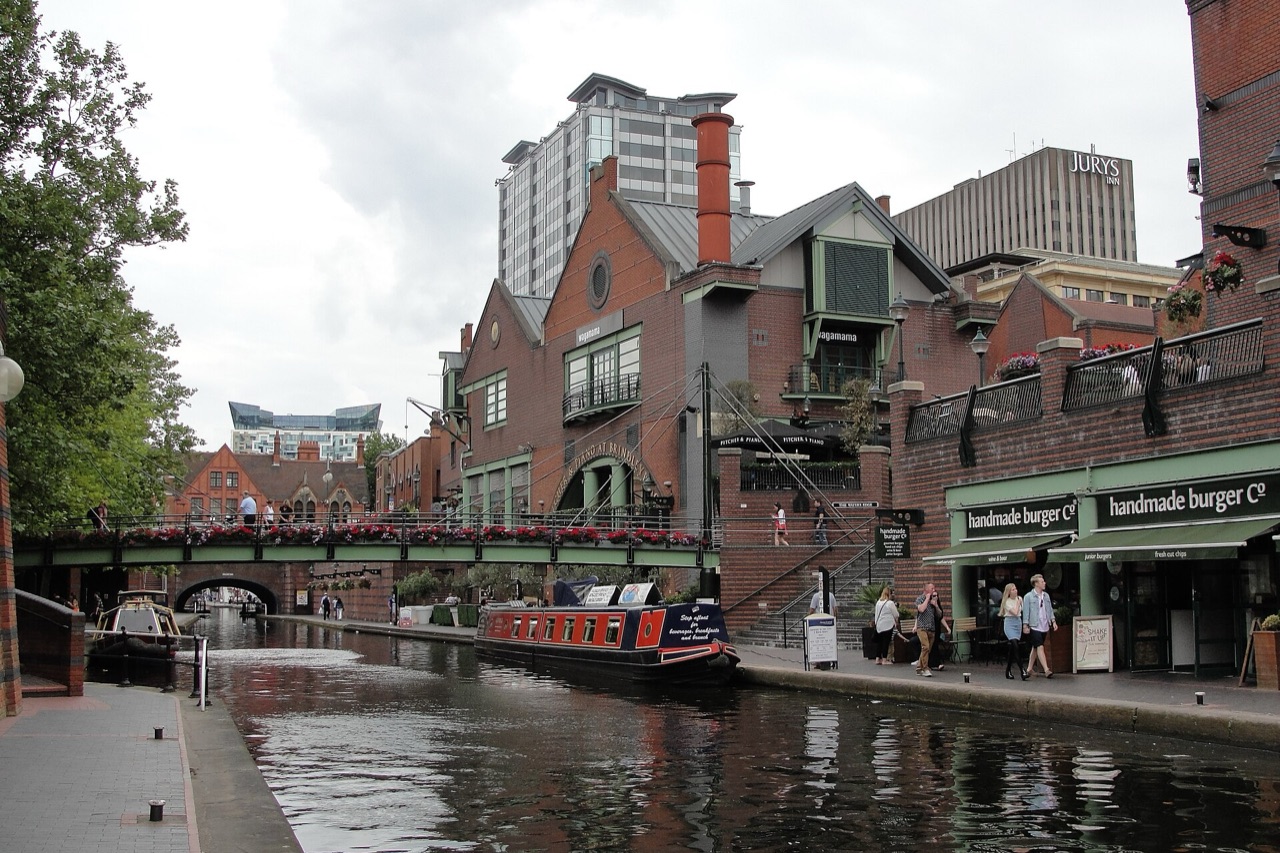

Birmingham has one of the largest student populations in England and a council-measured shortfall of purpose-built beds. The test for lenders is price: most students budget below the rents new schemes need, so the rent assumptions and the room mix carry the credit case.
City-level detail, including sales in the student postcodes and lending by type of lender, is in the H1 2026report on our sister site: Birmingham student accommodation report. For the national picture and trends, see the UK PBSA market report, H1 2026.
What drives student housing demand in the City of Birmingham?
Birmingham has five universities: the University of Birmingham at Edgbaston, Aston University and Birmingham City University in the city centre, University College Birmingham and Newman University. Birmingham City Council counted 102,089 full-time students at the five main institutions in 2022/23, and estimated that 47,434 of them needed a bed space in the city (Birmingham City Council, November 2024).
The council's supply and demand update set 24,614 existing PBSA bedspaces at 1 April 2024. It also counted 2,010 under construction, 7,168 permitted but not started and 5,591 in live applications. Under its Scenario 2, demand reaches 53,476 by 2027/28 against 33,792 existing and committed beds, a shortfall of 19,684 bedspaces (Birmingham City Council, November 2024). A 2026 City Spotlight report put operational stock at 29,487 beds at the start of 2026, rising to around 33,800 by 2028, and warned that much of the consented pipeline may not be delivered soon (Estates Gazette, citing Harris Associates and Studentcrowd, May 2026).
For a lender, that gap between consented and delivered student beds is both the opportunity and the risk in the Birmingham student accommodation sector. Demand is not in doubt. Whether a particular scheme can be built and let at a viable rent is the question.
Why is Birmingham called a precision market for student beds?
The same 2026 report described Birmingham as a "precision market". About three-quarters of PBSA beds sit in a £120 to £209 a week price band, and nearly 58% of students searching for a room set a maximum budget of £179 to £209 a week (Estates Gazette, citing Harris Associates and Studentcrowd, May 2026). StuRents data put the average PBSA rent at £220 a week in early 2025, up from £180 four years earlier (LandlordZone, March 2025).
New-build economics sit above that. Unite Group, the owner of Unite Students and the largest UK PBSA operator, said in July 2026 that weekly rents now need to exceed £300 for new development to be viable outside London (Unite Group, H1 2026 results). That gap is why Birmingham schemes that do get funded tend to be on a well-priced site, mix cluster flats with studio rooms to offer students more than one price point, or sit within walking distance of a campus where students will pay more for modern student living.
Rent per bed against the local budget bands, the mix of room types (studio and cluster flat), the social and amenity space, and letting evidence from comparable student accommodation. A rent roll priced at the top of the market needs strong location evidence to support the valuation.
Where does purpose-built student accommodation get built across the West Midlands conurbation?
Purpose-built student accommodation in Birmingham follows the universities: Selly Oak and Edgbaston around the University of Birmingham, and the city centre and Digbeth around Aston University and Birmingham City University.
Selly Oak
The main University of Birmingham student suburb, on the Bristol Road corridor south of campus. Galliard Homes reported consent in May 2024 for 836 beds at 1 Chapel Lane, the former Sainsbury's site: 472 studios and 364 cluster beds with commercial space and a medical centre (Galliard Homes, May 2024).
Edgbaston
Home to the University of Birmingham campus and the medical quarter. Haüs at 12 Calthorpe Road was reported with a 266-bed first phase due to complete in June 2026 for the 2026/27 year, and a 129-unit second phase approved in March 2026 (Construction UK Magazine, March 2026).
Bournbrook
The dense terraced streets between Selly Oak and the campus, long dominated by student HMOs. The city-wide Article 4 direction means new HMO conversions here need planning permission, which pushes new supply towards purpose-built blocks.
Birmingham city centre
Aston University and Birmingham City University's City Centre campus anchor the largest cluster of city-centre PBSA. Landmark Properties reported approval in March 2026 for 504 beds at 120 Suffolk Street, next to the Mailbox, with delivery estimated for 2029 (Landmark Properties, March 2026).
Digbeth
The creative quarter beside Eastside, a short walk from the BCU and Aston campuses and the planned Curzon Street HS2 station. It is an emerging area for student accommodation and co-living on former industrial land, with good transport connections to the rest of the city.
How does the Metropolitan Borough of Birmingham treat student HMOs and PBSA?
A city-wide Article 4 direction has applied since 8 June 2020, so converting a family house into a small HMO for three to six people needs planning permission anywhere in Birmingham. The council adopted an HMO supplementary planning document on 26 April 2022 (Birmingham City Council). Since 5 June 2023, smaller HMOs with three or four occupants also need an additional licence costing £755 per property (Birmingham City Council, May 2026).
Those controls limit new HMO supply, which supports demand for purpose-built beds. Our planning monitor still logged 35 applications to convert homes into student HMOs in the first half of 2026, with only 37.5% approved, against six PBSA applications, four of them approved. Most of the new capacity is coming from larger purpose-built and conversion schemes, not from houses.
Financing a student scheme in Birmingham, England
We arrange every stage of PBSA finance for Birmingham schemes. Development finance is typically 60 to 70% of cost, capped at 60 to 65% of gross development value. Investment debt on a let block runs at 55 to 65% LTV. All lending is subject to status, valuation and lender criteria.
- Rent evidence. Rents benchmarked against the £179 to £209 budget band most students set, not just against the newest competing scheme.
- Pipeline risk. Which consented schemes nearby are likely to be built before yours, and how many beds they add.
- Programme. A build programme that reaches practical completion before the September term, with Building Safety Act gateways allowed for in taller blocks.
- Exit. A forward sale, stabilisation facility or investment loan sized on realistic occupancy in the first year.
We are a finance arranger and introducer, not a lender. Nearby markets: Coventry, Wolverhampton and Nottingham.
Questions
What is classed as purpose built student accommodation?
Is there a shortage of student beds in Birmingham?
Does Birmingham have an Article 4 direction on HMOs?
How much can I borrow for a Birmingham PBSA development?
- Birmingham City Council, Purpose Built Student Accommodation: Supply and Demand Update (November 2024)
- Estates Gazette, Birmingham emerges as 'precision market' for PBSA investors (May 2026)
- LandlordZone, Rents in purpose-built student accommodation continue to outpace HMOs (March 2025)
- Unite Group, Interim results for the six months ended 30 June 2026
- Galliard Homes, Student housing scheme Birmingham (May 2024)
- Construction UK Magazine, Planning granted for phase 2 of Birmingham's newest luxury student accommodation scheme (March 2026)
- Landmark Properties, Birmingham City Council approves Landmark Properties' first Birmingham PBSA development (March 2026)
- Birmingham City Council, City-wide Article 4 Direction relating to HMOs
- Birmingham City Council, Additional licensing for HMOs
 Written and reviewed by Matt Lenzie, Founder and principal. Last reviewed .