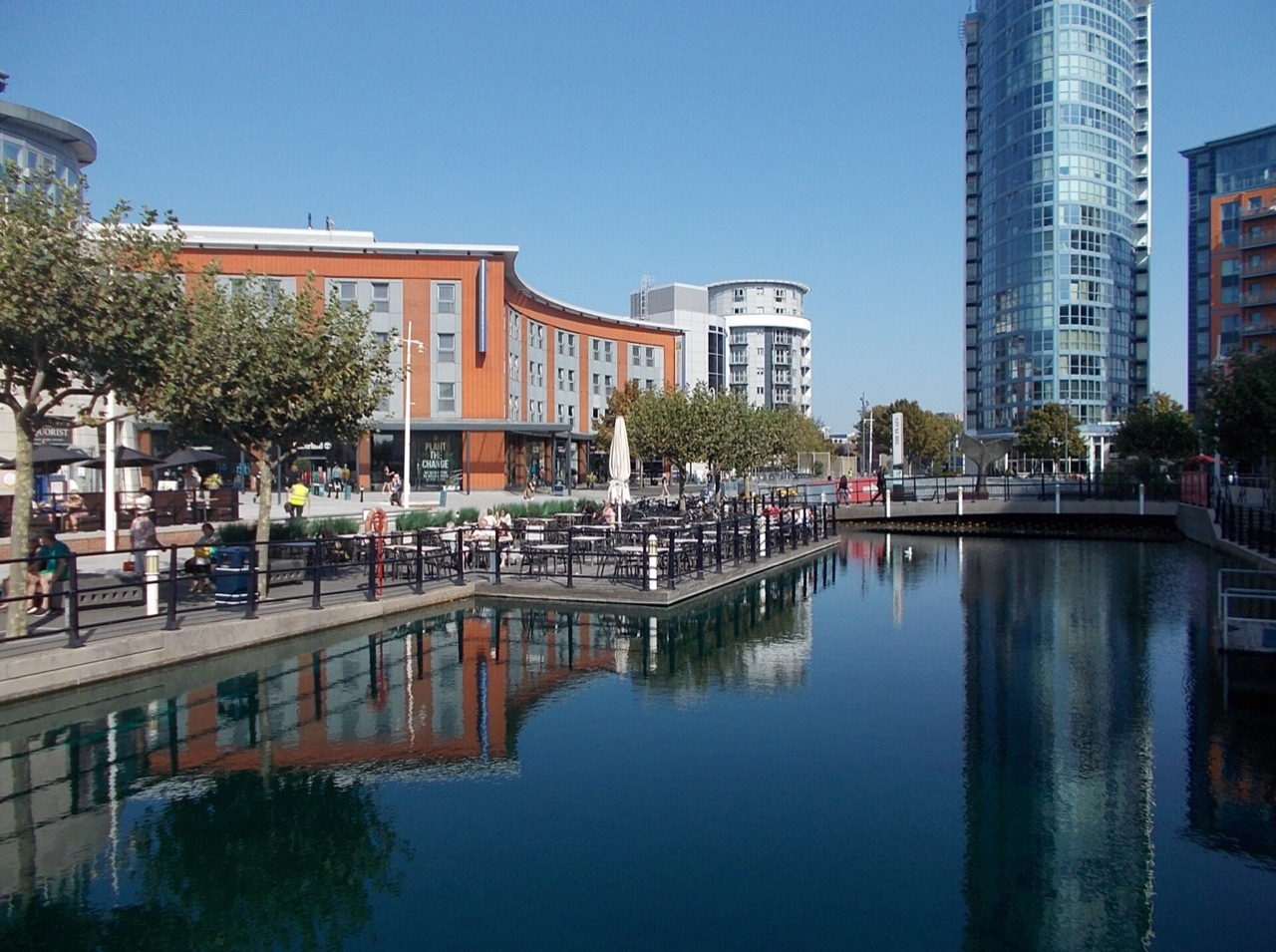

Portsmouth is a single-university city in which private operators run a large share of the halls the university allocates to first years. The HMO market is tightly controlled, and a 591-bed consented tower shows developers still see a case for new stock. Lenders will want to know whether a scheme sits inside the university's halls allocation or relies on direct let alone.
What student housing is in the Portsmouth, Hampshire planning pipeline?
1 purpose-built student accommodation application was lodged in the 12 months to H1 2026: 0 approved and 1 pending. Over the same period, 80 applications sought to convert homes into student HMOs.
Source: council planning exports, classified by us. Individual case references are withheld. Applications, not completions.
City-level detail, including sales in the student postcodes and lending by type of lender, is in the H1 2026report on our sister site: Portsmouth student accommodation report. For the national picture and trends, see the UK PBSA market report, H1 2026.
What drives student accommodation demand in Portsmouth?
Demand for student housing in Portsmouth comes from one place. HESA data puts the city at approximately 28,000 full-time students in 2023/24, about a quarter of them international, and the University of Portsmouth is the only higher education provider in the count (HESA 2023/24, approximate). That concentration is the first thing a lender underwriting a Portsmouth scheme will note: there is no second university to absorb beds if the first one's intake changes.
The university shapes where first years live, and which student accommodation types they choose before they arrive on campus. It guaranteed a halls offer for 2025 entry to new full-time students who made Portsmouth their firm choice and applied by 20 June 2025 (University of Portsmouth, 2025). For 2026/27 it lists 11 allocated halls, some university-owned and others owned by Unite Students and Yugo (University of Portsmouth, 2026). Unite alone reports more than 2,700 rooms across five Portsmouth properties (Unite Students, 2026).
No published source we could verify gives total PBSA bed stock, a students-per-bed ratio or a city occupancy figure for Portsmouth, so we do not estimate one. A borrower should expect the lender to ask for the scheme's own letting history instead.
What do student accommodation types cost in Portsmouth, England?
Hall fees are the clearest published benchmark for student living costs. The University of Portsmouth prices its allocated halls from £115 a week at Trust Hall to £200 at Greetham Street Hall for 2026/27, against £110 to £206 on 40-week contracts in 2025/26. Its guidance put a room in a private shared house at £125 to £165 per person per week, bills included, for 2025/26, and Unite's Portsmouth rooms are listed at £190 to £210 a week, bills included, for 2026/27 (University of Portsmouth; Unite Students).
| Hall | Owner or operator | Room type | Weekly rent |
|---|---|---|---|
| Trust Hall | University of Portsmouth | Self-catered, shared bathroom | £115 |
| Langstone Flats | University of Portsmouth | Self-catered, en suite | £142 |
| Harry Law Hall | University of Portsmouth | En suite room or studio | £155 to £189 |
| Trafalgar Hall | Unite Students | En suite room or studio | £158 to £186 |
| Catherine House | Yugo | Self-catered, en suite | £177 to £187 |
| Margaret Rule Hall | Unite Students | En suite room or studio | £177 to £193 |
| Greetham Street Hall | Unite Students | Self-catered, en suite | £193 to £200 |
| Rees Hall | University of Portsmouth | Catered, en suite | £197 |
Selected halls from the University of Portsmouth's list of 11; all on 40-week contracts. Source: University of Portsmouth, accessed September 2026.
For underwriting and valuation, the useful reading is how the price of each type of student accommodation overlaps with the next, because that is where value is won or lost. The top of the halls range sits above the shared-house range, so a new studio block has to justify a clear premium over a furnished, bills-included room in a Southsea house near the seafront. Half the allocated halls in the table are owned by private operators, which shows the university already relies on third-party student property to house first years. Cluster rooms priced near the halls midpoint compete more comfortably. We have not found a dated city-wide average PBSA rent, and we do not use undated listing averages.
Which Portsea Island areas suit purpose-built student living?
Almost all student accommodation in the City of Portsmouth sits on Portsea Island, the densely built island that holds the city centre, the campus and the seafront. Location decides the price a scheme can charge: the closer to campus, the stronger the case. Space is tight, which pushes new schemes upwards.
Portsmouth city centre
Around the Guildhall and the University Quarter, where most PBSA and the allocated halls are. Fusion Students' consented 591-bed tower on Arundel Street, described as set to be the city's second-largest residential building, is here; no construction start has been verified (Bidwells, accessed September 2026).
Southsea
The main student housing area of the city, south of the centre towards Southsea Common. Most second and third years live in its terraced HMOs, which is where the city's HMO controls bite hardest.
Portsea
The historic district between the campus, Gunwharf Quays and Portsmouth Historic Dockyard. Close to teaching buildings, with limited redevelopment land.
Fratton
East of the centre, with student terraces along the rail corridor. One of the lower-cost student areas for sharers.
Landport
North of the centre around Commercial Road, one of the areas where retail and office sites are the most likely source of future conversion or redevelopment for student use.
How does the City of Portsmouth plan for student halls and HMOs?
Portsmouth City Council adopted a Student Halls of Residence supplementary planning document on 7 October 2014. It sets accommodation and management standards and distinguishes halls from houses in multiple occupation (Portsmouth City Council). The council also states that HMOs are more tightly regulated in Portsmouth than in most parts of the country, and publishes separate HMO planning guidance (Portsmouth City Council).
Tight HMO control usually channels new student bed growth into purpose-built blocks, which supports the planning case for well-managed halls near the campus. Our own monitor recorded 80 HMO conversion applications across the city in the 12 months to mid-2026, a sign that the shared-house market remains active despite the controls (Capital Monitor, H1 2026).
Financing a student scheme in South East England
In a one-university market, the lender's key question is how the building fills each September. A scheme that is one of the university's allocated halls, whether under a nomination agreement or an allocation arrangement, carries a different risk from one competing on direct let. Our guide to nomination agreements and direct let explains how each is underwritten.
- Income route. Evidence of university allocation, or a direct-let track record in the city.
- Rent position. Pricing tested against both the halls range and bills-inclusive shared houses.
- Height and safety. Taller Portsea Island schemes fall under the Building Safety Act gateways, which lengthen programmes.
- Leverage. Indicatively 60 to 70% of cost for development, capped at 60 to 65% of GDV, and 55 to 65% LTV for investment debt.
Local lending is dominated by specialist lenders. Of the property-secured charges in Portsmouth postcodes that we could match to a lender type in H1 2026, 89% were to specialist banks or bridging lenders rather than high-street banks (Capital Monitor, H1 2026).
All lending is subject to status, valuation and lender criteria. We are a finance arranger and introducer, not a lender. Nearby markets: Southampton, Winchester and Brighton.
Questions
What counts as purpose built student accommodation in Portsmouth?
Is purpose built student accommodation in Portsmouth a good investment?
Can I get development finance for a student tower in Portsmouth?
- HESA, Higher Education Student Statistics 2023/24 (approximate city figures)
- University of Portsmouth, Our halls of residence (accessed September 2026)
- University of Portsmouth, Student Housing in Portsmouth brochure 2025-26
- Unite Students, Portsmouth student accommodation (accessed September 2026)
- Bidwells, Arundel Street, Portsmouth (accessed September 2026)
- Portsmouth City Council, Student halls of residence SPD
- Portsmouth City Council, Planning for houses in multiple occupation
- PBSA Finance, Capital Monitor H1 2026 (planning and lending data)
 Written and reviewed by Matt Lenzie, Founder and principal. Last reviewed .